
As urbanization accelerates globally, the importance of integrating greenery into city environments has never been more paramount. Trees not only beautify urban landscapes but also offer essential ecological benefits including air purification, carbon sequestration, shade provision, and habitat creation for urban wildlife. This news article explores a diversified palette of remarkable tree species that are making substantial contributions to sustainable city living and urban greening initiatives. Drawing from botanical insights and contemporary urban forestry practices, we delve into the characteristics and benefits of these trees, illustrating how they form the backbone of thriving, green urban ecosystems.
**The Vital Role of Urban Trees**
Urban trees act as natural air conditioners and pollution absorbers, combatting the heat island effect prevalent in densely built-up areas. They are indispensable allies in promoting biodiversity and fostering human well-being. An ideal mix of native and exotic tree species can sustain cityscape aesthetics while ensuring ecological resilience. Here we spotlight several exemplary species, including Lagerstroemia Indica, Delonix Regia, Hibiscus Tiliaceus (both Rubra and standard varieties), Pongamia Pinnata, Albizia Saman, Millingtonia Hortensis, Ficus Nitida, and many more, revealing their significance and adaptability for urban planting.
**Lagerstroemia Indica: The Vibrant Crape Myrtle**
Lagerstroemia Indica, commonly known as the crape myrtle, is celebrated for its splendid summer blooms ranging from striking purples to vivid reds and whites. Its adaptability to diverse soils and urban conditions makes it a popular choice for street-side beautification and park landscaping. Thanks to its moderate size and drought tolerance, it thrives in areas where water resources are limited while delivering prolonged floral displays that attract pollinators.
**Delonix Regia: The Majestic Flame Tree**
Delonix Regia, popularly called the flame tree, is renowned for its fiery red, flamboyant flowers and expansive canopy that offers much-needed shade in open urban areas. This species favors tropical and subtropical climates and thrives along avenues and promenades. Beyond its aesthetic appeal, the flame tree contributes to air quality improvement and cools urban microclimates, thereby enhancing outdoor comfort for city dwellers.
**Hibiscus Tiliaceus and Hibiscus Tiliaceus Rubra: Coastal Guardians**
Both the standard Hibiscus Tiliaceus and its red variant, Hibiscus Tiliaceus Rubra, are robust coastal species adapted to saline environments. Their tolerance to wind and salt spray makes them ideal for planting along shorelines and waterfront parks. Additionally, their striking flowers serve as magnets for butterflies and nectar-feeding birds, enriching urban biodiversity.
**Pongamia Pinnata: The Nitrogen-Fixing Pioneer**
Pongamia Pinnata, a leguminous tree known for its oil-rich seeds, is gaining attention for its ecological services in urban afforestation. Not only does it fix atmospheric nitrogen enhancing soil fertility, but it also withstands pollution and adverse urban conditions. Its dense foliage provides shelter for birds and insects, making it a crucial component in urban biodiversity corridors.
**Albizia Saman: The Rain Tree Sentinel**
Albizia Saman, commonly referred to as the rain tree, is distinguished by its vast dome-shaped canopy and fern-like leaves. Able to endure varied soil types and drought, the rain tree is often planted in parks, schoolgrounds, and large open spaces as a shade tree. Its ability to rapidly sequester carbon and improve soil organic matter benefits both ecosystems and urban communities.
**Millingtonia Hortensis: The Indian Cork Tree**
Known for its fragrant white flowers and fast growth, Millingtonia Hortensis adds sensory delight to urban streetscapes. Its tall, slender profile fits well within narrow urban corridors without overwhelming sidewalks, while its blossoms emit a soothing fragrance that uplifts city environments.
**Ficus Nitida: The Strangler Fig and Urban Giant**
Ficus Nitida, a deciduous to semi-evergreen tree, is celebrated for its dense foliage and expansive roots capable of stabilizing urban soils. Its canopy offers perennial shade, and as a keystone species, it sustains various birds and insects throughout the year.
**Peltophorum, Ginkgo Biloba, and Magnolia Grandiflora: Diverse Urban Icons**
Peltophorum trees are admired for their bright yellow blooms and resilience; Ginkgo Biloba, a living fossil, is prized for its unique fan-shaped leaves and resistance to pollution; Magnolia Grandiflora enchants city parks with its large fragrant flowers and glossy foliage. Together, they diversify urban forests by providing seasonal variation and habitat niches.
**Photinia Serrulata and Cinnamomum Camphora: Evergreen Beauties**
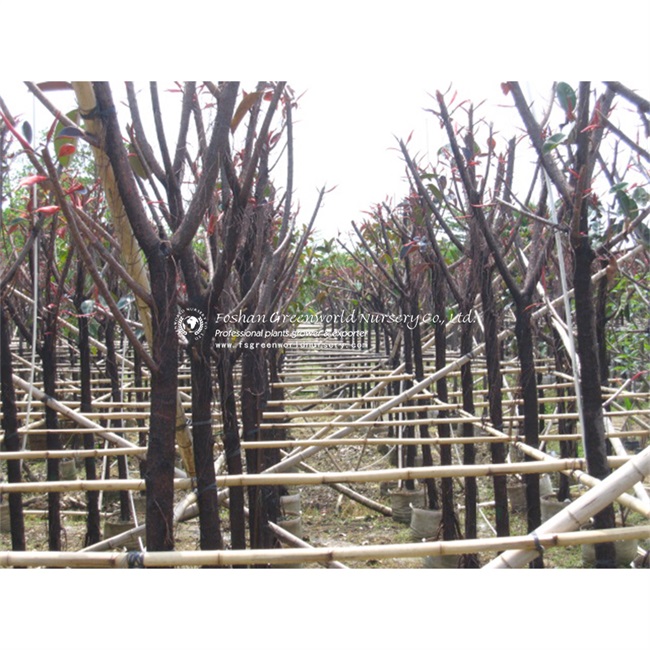
Photinia Serrulata, with its vivid red young leaves and white flowers, contrasts beautifully with the aromatic and robust canopy of Cinnamomum Camphora (camphor tree). Both species serve as evergreen backdrops, contributing to year-round greenery and enhancing urban air quality by absorbing pollutants.
**Prunus Yedoensis and Trachycarpus Fortunei: Seasonal and Structural Interest**
Prunus Yedoensis or Yoshino cherry trees dazzle urban dwellers with ephemeral yet spectacular spring blossoms, fueling cultural events and urban tourism. Trachycarpus Fortunei, the hardy windmill palm, injects an exotic vertical element to cityscapes, tolerating cooler temperatures and adding ornamental value.
**Tecoma Stans, Wodyetia Bifurcata, and Sea Grape Plant: Versatile and Resilient**
Tecoma Stans, with its bright yellow trumpet-shaped flowers, adapts well to heat and drought, making it suitable for urban medians and streetscapes. Wodyetia Bifurcata, or the foxtail palm, adds tropical flair, while the Sea Grape Plant thrives along coastal edges, stabilizing soils and resisting saline spray.
**Sacred and Cultural Icons: Ficus Religiosa and Ficus Racemosa**
Ficus Religiosa, revered as the sacred fig tree, and Ficus Racemosa hold cultural and religious importance in urban communities. They are valued not only for their spiritual symbolism but also for their ecological roles as shade providers and carbon sinks.
**Bonsai Sacred Fig Tree: Miniature Art in Urban Spaces**
The Bonsai Sacred Fig Tree offers a creative approach to urban greening by allowing space-efficient greenery that is both aesthetically pleasing and spiritually significant. Such miniature trees can be part of green balconies, public indoor gardens, or community spaces, fostering a connection between people and nature in dense urban settings.
**Toward Greener Cities: Integrating Botanical Diversity**
Incorporating this assemblage of tree species into urban planning elevates both the environmental quality and cultural richness of cities. Urban foresters and planners are encouraged to adopt species-specific planting strategies that consider climate suitability, soil conditions, biodiversity benefits, and community preferences. A diverse urban forest reduces the risks associated with pests, diseases, and climate change while enhancing resilience.
**Conclusion**
As cities embrace sustainability goals, the deliberate selection and nurturing of diverse tree species are indispensable. From the dramatic blossoms of Delonix Regia to the sacred stature of Ficus Religiosa, each species contributes uniquely to urban life. Together, they weave a tapestry of ecological services, social benefits, and aesthetic delights that enrich human experiences and promote healthier, happier cities for generations to come.
---
*This article aims to provide an informed perspective on prominent tree species crucial for urban greening projects, encouraging communities and governments to cultivate greener, more sustainable urban spaces.*